Wednesday, April 4, 2018

Snow Day Chores


Blackout during March 21 snow storm (photo: Eileen McCafferty)

By Eileen McCafferty

My phone dinged at precisely 8:15 p.m. that Tuesday night in late March as an alert from Ramapo College. It read “RCNJ Alert Me Now 3/20/2018. Due to inclement weather Ramapo College is closed tomorrow Wednesday, March 21, 2018.”

The inner child inside me expressed joy in the idea of a snow day, but the adult in me already knew that tomorrow was going to be a rough storm and I was not ready to lose power...but Mother Nature had other plans.

The next morning was spent doing homework, to keep up with classes that were cancelled, and catching up on laundry, as well as driveway maintenance and other chores. Every few hours, the journey was made from my front door to the unplowed streets on my quiet Rockland County neighborhood street to walk Jack, the ‘anti-snow/anti-rain, schnauzer-poodle, love of my life’ dog. Within three minutes of being outside and returning to the warmth of my entrance way, Jack’s dark gray fur would be heavily dusted with snow, and once inside it was easily seen that the snow was melting off his face. While he hates the snow, he was so well trained to not relieve himself in the house that he makes a scene at the door when it’s time to go. 

After returning Jack to the comfort of the house, my mother and I would grab shovels to remove the newly accumulated snow from the driveway steps and windshields of our cars. Runny noses, cold, tired hands, and wet socks are all the products of shoveling driveways, but in order to avoid removing all this snow at once, we had to take care of it every few hours. 

Sitting in the bay-window in the front of the house is a curious cat who goes by the name of Poot; she was staring outside, wishing to pounce on these tiny white specs falling from the sky. Poot was so determined to get to these specs that opening and closing doors to the outside world became a game of ‘push and run’. She sits at your feet as you open the door, and you must gently push her back with your leg while making a run outside. As much as she wants to attack the snow, I am fairly certain if I let this house cat outside, she would lose her mind and run inside.

Later in the afternoon, the snow accumulation became so intense that sturdy tree branches in our back yard began to bend with pressure. The house jittered as the harsh winds hit the sides and occasionally the power would hint at flickering off. Everything seemed to be a normal day of snow fall…until a branch crashed down from a neighbor’s yard onto the connecting powerlines that provide a block and half with power. 

The time was 11:15 p.m., the house was still warm, but frighteningly dark. Looking out the bay windows onto the street I’ve lived on since I was born, it was almost like looking at a painting. It was so still, so dark, and so serene. We were left without power for over twenty-four hours. The night consisted of three layers of clothing, two blankets and a curled-up cat on top of me to share warmth. 

Out of all the snow day struggles, being cold with no relief from it is the worst part. Snow days always make my inner kid excited, but I have learned the real struggles that come from snow days. I feel better prepared for heavy accumulations but I also hope that we are done with snow days for this year.

Tuesday, April 3, 2018

Emotional Pompton Lakes Residents Bare All at a Community Event


By Andrew Herrera

“I basically had to give up [my] house,” one resident said. “I don’t even want to drive down that street anymore, it’s too painful.” Another resident mentioned that her own sister told her to stop making a fuss about the threats to health posed by the toxic groundwater. A couple described the dizzying litany of surgeries their nephew had to undergo in order to treat a rare form of cancer.

These comments were shared by participants in a recent Pompton Lakes community meeting organized by the Ramapo College Environmental Assessment class that is surveying the impacts of the pollution of Pompton Lakes caused by DuPont’s old munitions factory. We students of the class were looking to get some personal insights into how the contamination has affected residents, especially those in the Plume area of town whose groundwater has been contaminated and whose basements have been infiltrated by chemical fumes. What we got was something much more emotional than reading about pollution in Pompton Lakes.

Individual residents sat down with one student at a time; the students asked residents questions based on the type of impacts they are studying for the environmental assessment. My impact indicator is organizational, so I asked residents questions about local politics and debate over the contamination issue. The interviewees offered me some stark truths. One, for example, was the account of the woman mentioned previously, whose sister had told her to stop talking about the issue of contamination in the Plume. Of the 17 or 18 residents who came to the meeting, all seemed to agree that the town council vehemently opposed discussing the contamination at all. This is despite alarming incidents of rare diseases and cancers among residents in the Plume.

Multiple times, residents pointed to property values as the reason why. The town council, as well as residents living outside of the Plume, seem to principally fear that if the contamination becomes more widely publicized, property values for homes throughout town will drop, affecting municipal revenue and residents’ finances. The participant who had contracted the rare form of cancer recalled how he often heard property values mentioned by all sorts of people growing up as the reason why the contamination issue needed to stay away from the public eye. According to what residents hear around town, people seem to fear what will happen if DuPont is forced to pay out reparations or buy homes in the neighborhoods it polluted. Retired DuPont employees worry they’ll lose their pensions, while others believe that DuPont needs to stay in town to continue paying the property taxes that help fund public schools.

Of course, everything said needs to be taken with a grain of salt. We students were only able to hear from a small fraction of the town’s population. No one there supported DuPont or thought that the contaminated water was not a problem. Yet there are clearly plenty of people who think those things. But they don’t come out to events like this. For now, their side of the story remains in the background, less discussed in public.         
        

Monday, April 2, 2018

Agent Orange and Vietnam's Environmental Costs


By Mary Waller

The Vietnam war was one of, if not the most, controversial war in American history. Even with much of the nation turning against the war, scientists were concerned about the chemical warfare used during the war. Agent Orange was a weapon that scientists knew was dangerous but was still used anyways. Even though the Vietnam War was decades ago, the environment is still damaging from the devastating mark the chemical onslaught left behind.

What exactly is Agent Orange? Agent Orange contains dioxin, a contaminant that has detrimental health implications for humans, such as cancer, birth defects, psychological and neurological effects on those who were exposed to it. Agent Orange has hurt countless people both inside and outside of Vietnam, but how has this deadly chemical affected the environment? 

Poor soil quality, water contamination, loss of timber, and heavier flooding and erosion are just a few things that Vietnam was left with in the wake of defoliation from Agent Orange and other herbicides. Vietnam’s woodlands and wetlands covered about 25 million acres, equivalent to the size of Vermont, New Hampshire and Massachusetts combined. During the war, about 20,000 herbicide spray missions were conducted with the intention to destroy these lands and the US Air Force reached approximately 10% of the land area of Southern Vietnam and about 20% of the forests, according to the Agent Orange Record website.

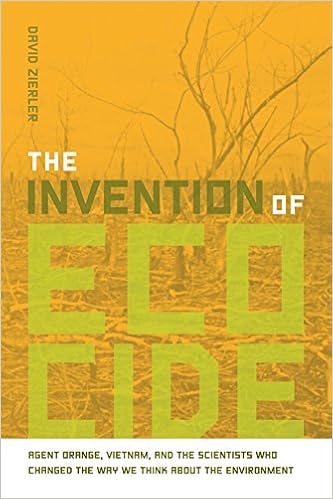
After just two weeks of spraying, about 10% of the trees died from a single spray. The goal of the spray missions were to destroy the forests and agricultural lands with the hope to deny food to the enemy, also damaging civilian food sources.  The destruction was so great in the area that two new terms were coined; “ecological warfare” and “ecocide.”

The environment was not the only thing that was hurt but so was the wildlife who rely on the environment. Tigers, elephants, leopards and bear among others were hurting because of the spray missions. The damage to crops led to the spread of disease among these and other species. Post-war human activities threatened extinction of many types of animals.

To add insult to injury, other sustainable agricultural harvesting of forest products were no longer viable.

Over the years there have been many attempts to help restore the forests but it has been an uphill battle. The Ma Da forest north of Ho Chi Minh City has undergone heavy reforestation and Vietnamese scientists have restored much of the habitat and some wildlife have been returning.

The Vietnamese have planted single species of acacia and eucalyptus in upland forests and defoliated regions as a local source of renewable energy. Every 4 to 5 years the trees are harvested and sold, but it’s only a temporary measure; the long term goal is to increase biodiversity and quality of the forest as much as possible. Yet there has been rising wholesale destruction of forests, pollution in rivers and lakes for short-term economic gain.

It’s important not to forget the devastating effects Agent Orange has left in Vietnam, including dioxin leaching into surrounding areas and lakes that make the toxic chemical spread much faster and more widespread. Scientists are still cleaning up the mess Agent Orange left behind, but the struggles people face on a daily basis is an ongoing challenge. 

Recycling Film Screening April 5


For Immediate Release

Contact: Kristie Murru

Communications Seniors Host Recycling Film Screening April 5

For our Global Communication Capstone Course, we created a campaign based on promoting sustainability and minimizing waste on Ramapo College’s campus. Working closely with Ramapo Green and two of its participating organizations; 1-STEP and the Garden Club, we hope to raise awareness and educate the Ramapo community on proper recycling, composting and waste-reduction habits. Our campaign will work to not only promote our events but assist the organizations on campus that have been working tirelessly on their projects.

As an off campus resource we have been working closely with the local nonprofit MEVO, the Mahwah Environmental Volunteers Organization. This organization engages the local community with sustainability based projects in order to transform its surrounding environment. MEVO works toward addressing environmental concerns on a local level.

Join us as we kick off Earth Month with a screening of Reuse! Because You Can’t Recycle the Planet on Thursday April 5th from 2:15-4:15 in Friend's Hall (SC-219). This documentary, directed by Alex Eaves, follows the director as he travels the United States to teach communities ways to reuse their trash.

Following the screening there will be a workshop with the director Alex Eaves. We welcome you, your students and others you feel would be interested in attending our event and take part in this critical discussion.


--Kristie Murru, Christopher Bernstein, Paul Iannelli, Matthew Stevens
"Realize" Campaign Organizers

Friday, March 30, 2018

42 Years Later: Americans and Vietnamese Are Still at War


Vietnamese Agent Orange poster

By Kerry Hadrava

It has been nearly 43 years since the conclusion of the Vietnam War, however veterans and their families and people living in Vietnam are still left with another battle.

Agent Orange, a chemical herbicide sprayed in millions of gallons across the landscapes of Vietnam to control plant growth in battle zones, has an extreme high level of toxicity. Soldiers and civilians who came into contact with it or its affected regions during the war are still experiencing its adverse effects decades later.
  
According to the Vietnam Association of Victims of Agent Orange/Dioxin (VAVA), it is estimated that over 4.8 million people living in Vietnam have been exposed to this toxic chemical and over 3 million have been suffering from a variety of diseases including various types of cancer as well as birth defects and deformities.

Although the United States has admitted responsibility for Agent Orange being the cause of numerous health issues for U.S. veterans and their families, those struggling overseas have yet to get adequate help or recognition they are in need of. A large part of this story remains untold.


Agent Orange: A Toxic History


By Kristie Murru

During the Vietnam War, Agent Orange, a powerful herbicide, was used by the United States military in order to eliminate forest cover and rice crops that the Viet Cong and North Vietnamese troops used to hide in. The program, which took place between 1961 to 1971 was code named “Operation Ranch Hand,” where troops sprayed 20 million gallons of the herbicides over Vietnam, Cambodia and Laos, according to History.com. This chemical warfare was used to target the enemy forces not only to kill the plants used by these forces as coverage but in order to kill the crops that the people would eat.

Using airplanes, the United States spread Agent Orange and other deadly chemicals all over Vietnam, even areas of South Vietnam that were not fighting U.S. troops. U.S. military members were also contaminated by these chemicals in situations where they used hand-sprayers around military bases. The name “Agent Orange” came from the color coded barrels that were used to carry the chemicals. The chemicals were manufactured by Monsanto, Dow Chemical, etc.

A chemical byproduct that is produced by the manufacturing of pesticides, particularly that of Agent Orange is 2,3,7,8-tetrachlorodibenzo-p-dioxin, or TCDD, which is a type of dioxin. In addition to being a byproduct of herbicide production, dioxins are also created from trash incineration; burning gas, oil and coal and in cigarette smoking. TCDD is the most dangerous of all dioxins.

Dioxin is a chemical that lasts for years in soil, lake and river sediments, which causes the chemical to be absorbed in the fatty tissue of fish, birds, and other animals. Humans become exposed to the chemical by consuming poultry, meats, dairy products, eggs and fish. Dioxin is known to be extremely toxic and is carcinogenic. Developing fetuses are sensitive, as exposure to dioxin can cause spina bifida and nervous system development.

Veterans returning from Vietnam experienced rashes, skin irritations, miscarriages, birth defects in children and cancers such as Hodgkin’s disease, prostate cancer and leukemia. In a 1988 report an Air Force researcher stated that the government had been aware of the potential damages of using Agent Orange, but they believed that because it was being used on the enemy that the U.S. troops were not being contaminated. This flawed logic led to millions of servicemen being contaminated by the toxin.

According to History.com, “In 1991, President George H.W. Bush signed into law the Agent Orange Act, which mandated that some diseases associated with Agent Orange and other herbicides (including non-Hodgkin’s lymphoma, soft tissue sarcomas and chloracne) be treated as the result of wartime service.”

The chemical companies that manufactured Agent Orange faced lawsuits by veterans who had been contaminated, but the lawsuits were settled out of court and provided some money to some of the veterans. In 2004, Vietnamese citizens filed a class action lawsuit against these same companies but the suits were dismissed by U.S. judges. Questions were raised as to whether the United States was trying to avoid having to admit to war crimes in Vietnam, which would potentially open up even more lawsuits against the government.

For further information:

Thursday, March 29, 2018

Students Lose Class Time Because of Dangerous Weather


By Mary Waller

College students have been losing valuable class time due to the dangerous snow storms that have been pounding the Northeast, which seem to be falling on the same day, on Wednesdays. While many students normally would be thrilled and happy to get a day off, it has gotten to the point where students do not want to miss any more class and schools are mandating that professors provide make-up assignments or extra class time. With students already having busy schedules both in and out of the classrooms, making up the work is becoming a struggle for both professors and students.

Ramapo College has, so far, cancelled classes at least 5 times due to the weather, with three of the days being Wednesdays. The dangerous and unprecedented snowstorms have made college students miss so many classes that colleges have been considering enforcing make ups for the missed time outside of the remaining scheduled class time.

These cancellations have become a serious concern for seniors; as many classes that have been cancelled are requirements to graduate on time. Senior seminars and senior project classes have been rescheduled, postponed and overall cancelled.

But where did this unsafe, high-risk weather come from? It’s no secret that climate change is to blame for the growing danger from winter storms. These storms have become much more frequent and common in the eastern two-thirds of the contiguous United States over the past century.

Approximately twice as many extreme U.S. snowstorms occurred in the latter half of the 20th century than the first, according to NOAA. After studying these storms it’s believed that the severity has rooted back to the warmer-than-average ocean surface temperatures in the Atlantic. The higher temperatures can lead to high amounts of moisture in the air, intensifying the winter storms. The increase in moisture allows for heavier precipitation, in turn more dangerous and heavy snowfalls.

In contrast to the heavy snowfall and intense storms that the Northeast and parts of the Midwest have been experiencing, the South and lower Midwest saw reduced snowfall in the last century. Even with the heavy snowfall increase, total snowfall in the Northern Hemisphere has decrease because of the higher temperatures shortening the time the snow stays on the ground.

There has been a somewhat shift in the weather cycle we are accustomed too; in recent years, unusually warm air in the Arctic has forced winter storms to travel in the southern parts of the United States. When we think of winter storms, we do not think of the southern United States. Eight of the last 10 winters experienced in the United States were warmer that the average winters between 1951-1980 in the U.S. 

Not to mention, El Nino helps the snow storms gain strength and severity. Snowstorms are approximately twice as likely to occur in the Northeast and Southeast regions with a strong El Nino present, compared to neutral conditions.

The intensity of the storms relate back to climate change and the impact that humans have had on the environment. We’ve had such an impact on the environment, it can be said that it’s karma that the weather has negatively impact our schedules. Since humans have hurt the environment we may be getting these strong storms because we’ve been so cruel to the climate.

The class cancellations that thousands of students and faculty are trying to make up for now cannot compare to the impact and scar that we’ve left on the climate. The only thing that we can do in both cases is to work better, harder and faster to help improve our schedules and to help save the Earth's environment.