By Victoria Coronel
One of the most heavily discussed topics today is climate change and the environmental decay of our planet. Diverse concepts have materialized in order to find solutions for the problems. Ecology and sustainable growth have been confirmed to be the main solutions currently. Innovations for sustainable growth include the creation of hybrid cars, recycling and reducing carbon dioxide from factories. “The True Cost”is a Netflix documentary on sustainability and the world of fast fashion. This documentary has enlightened me on the actual effects that the fast fashion industry have on our planet and what we can do about it.
This is a topic that is personal to me and one that I take very seriously. I work for a company called The Real Real, which is a luxury consignment business that promotes sustainability and reusing. The fashion industry is one of the most wasteful and environmentally impactful industries in the world. There is a lot of pressure to find less wasteful ways of producing clothing and to make fashion more sustainable.
Sustainability can be defined in numerous ways. According to the United states Environmental Protection Agency, sustainability is based on the belief that everything we need to survive directly and indirectly depends on our natural environment. Sustainability creates and maintains the conditions in which humans and nature exist. It is important to discuss the impact that apparel choices have on the environment. Many students may be unaware of how their clothing choices effect the environment. There are many reasons why knowledge of sustainability would improve the apparel choices of college students. Students should be aware that “The Apparel Industry is one of the largest industrial polluters, causing damage to both human health and the environment” (1). That is why it is equally as important to be aware of the fabrics that are being purchased and worn.
For almost twenty years now, people have been relying on fast fashion, a new notion which entails rapid garment production in a cost-efficient manner. This efficiency is attained through the retailers understanding of the customers wants, which consist in having high fashion looking garments at very low prices. Lots of stores have mission statements that endorse this concept of affordable high fashion such as Zara, Forever 21and H&M to name a few. These companies generate billions in yearly revenue. Fast and cheap fashion implies more disposability, which in turn incites more consumption. One of the main issues we face is that the clothing produced is not biodegradable and is filling up landfills.
The International Journal of Consumer Studies gave a brief description of the slow fashion movement: “It is a socially conscious movement that shifts consumers’ mindsets from quantity to quality, encouraging people to buy high-quality items less often”. (2) Although high quality fabrics such as silk, linen, and cashmere may be expensive, they have a positive effect on the environment. All these fabrics are grown from natural fiber and are not man made. Cotton is the most common natural fiber and can be found in most inexpensive clothing.
Sustainable fashion isn’t an entirely new phenomenon, we know that past generations recycled clothing without knowing it. When there were special occasions, they would take their casual clothes and add ornaments and all kinds of things to make their garments look dressier. Eco-fashion reflects a natural change of values. Another solution for being “green” in fashion is to reduce the impact of washing and aftercare. As well as purchasing clothing made of recycled materials, in 2018 Levi’s launched an initiative to create all denim out of recycled materials. Eco-friendly fashion is not only about tangible aspect, which is the material that is used, when and how. It is also about human aspect, the ethical characteristic it has which respects social standards such as limiting working hours and minimum wages. Ethically correct production also means child labor is forbidden.
Back to the material side of things, sustainable fashion supports cotton farming and the changeover to more environmentally friendly materials and dyes. As mentioned previously, Sustainable fashion also includes recycled materials used to create new ones. People are craving lifestyles based on health and sustainability. Today, when looking for new products, customers not only look for quality and design but also ecological awareness. Hopefully younger generations quickly adapt to the eco-friendly movement of sustainable fashion, as it is bigger than just buying recycled clothing. It is about choosing a better earth and a better life for all humans.
Works Cited
Barney, J. (1991), "Firm Resources and Sustained Competitive Advantage", Journal of Management, Vol. 17, pp. 99-120.
Carter, C.R. and L.M. Ellram (1998), "Reverse Logistics: A Review of the Literature and Framework for Future Investigation", Journal of Business Logistics, Vol. 19, No. 1, pp. 85-102.
Corbett, C.J. and R.D. Klassen (2006), "Extending the Horizons: Environmental Excellence as Key to Improving Operations", Manufacturing & Service Operations Management, Vol. 8, No. 1, pp. 5-22.
Das, P. (2012), "Sustainable Supply Chains: Eco-friendly Packaging and the Indian Challenges", Available at http://www.managementcanvas.iimindore.in/icanvas/index.php (Accessed on February 8, 2013). Dowlatshahi, S. (2000), "Developing a Theory of ", Interfaces, Vol. 30, pp. 143-155.
Monday, December 7, 2020


Pandemic Experience
By Michael Brighton
On January 21, 2020 the CDC confirmed its first Coronavirus case in the United States. March 7, Governor Andrew Cuomo issued a state of emergency for New York. The pandemic has been going on for almost a year now and yet it feels like a longer time. My life has changed very much since the start of the pandemic. The pandemic caused a lot of stress physically, mentally and for everyone around me. The world changed in a matter of a few months to something I thought I'd never experience in my life.
When I was younger I remember when the Swine Flu was a big deal and people in school were worried about catching the virus. After a few months the virus was non-existent and scientists were telling people there is much worse to worry about than the swine flu. Flash forward to the present day, I am now seeing another strain of virus that is unlike anything we have seen. The virus caused mass shutdowns all across the world and millions of people have been affected and many have died. According to "Coronavirus World Map: Tracking the Global Outbreak" in The New York Times, about 1.4 million people and counting have died from this virus as of early December. Vaccines are being rushed and being created faster than ever, which is making people cautious of how safe these vaccines really are.
Quarantine Effects
As stated before, because of the virus many people across the world including me have been affected in multiple ways due to the quarantine. When Governor Cuomo first announced the stay at home orders i was unsure how life was going to be. Every week leading up to the quarantine consisted of going to the gym, hanging out with friends, hiking, and going out at night for drinks. These are things I took for granted before quarantine. On April 16, almost a month later, Cuomo extended stay at home orders. When this happened I was upset and started to worry about all the summer plans I’d made before the virus. Then another month goes by only to find out the quarantine was extended once again until June 13. At this point I was becoming very depressed and irritated. I was drinking more alcohol and was not leaving bed all day.
Most of this stems from me not going to the gym. With the gym being closed I didn't have my outlet anymore. Working out made me happy and if i was upset i would go to the gym and let it go away. It was my therapy. I'm not gonna lie, i was visiting my 3 closest friends at the time, but we were all becoming bored and were drinking heavily when we did meet.
The Phases
Cuomo announces his 4 phase plan to slowly reopen parts of New York. Each phase was different for parts of New York, depending on the amount of cases and new cases. Phase 1 and 2 started in June, which consisted of places that had a low infection rate. Phase 3 and 4 were the most at risk ones. Places like outdoor dining were introduced and larger shopping areas like malls and museums were reopening at low capacity. Many people were upset with how slow the phases were taking to open and the decisions of who gets to open first had businesses trying to sue Governor Cuomo. There were arguments over why people can go to a packed Walmart, but they are not allowed to go on their favorite hikes. I felt like I was under the same quarantine rule because nothing much changed for me. Gyms were still not allowed to open and I was an essential worker and college student, so my weeks stayed the same.
My Plan
Once I saw that the quarantine was becoming less strict and when my area reached phase 3, I knew it was time to change. I wasn't happy the past 3 to 4 months, so I decided to take things into my own hands. Knowing that I was wasting my summer, I started to exercise pretty daily. My days would consist of running around my neighborhood listening to music. I also found a man on Facebook who was selling dumbbells, so i can exercise more. Doing these simple things were not only to keep in shape, but to keep my hopes up. Each day I was checking the news on what is opening next and listening to Cuomo's live updates. These things improved my mental state and were enough to last until today.
Overall, my experience during this pandemic has been a roller coaster of emotions and I believe that goes for everyone else. The pandemic made us realize who we really are and what is important in our lives. It also put us in a situation to see how we are under tough and stressful circumstances. Many of us, like me, were affected hard early on and then overcame what we were dealing with to end up where we are now. The pandemic is still not over and nobody knows when it will be, but we know that there is an end in sight and that is something to look forward to.
On January 21, 2020 the CDC confirmed its first Coronavirus case in the United States. March 7, Governor Andrew Cuomo issued a state of emergency for New York. The pandemic has been going on for almost a year now and yet it feels like a longer time. My life has changed very much since the start of the pandemic. The pandemic caused a lot of stress physically, mentally and for everyone around me. The world changed in a matter of a few months to something I thought I'd never experience in my life.
When I was younger I remember when the Swine Flu was a big deal and people in school were worried about catching the virus. After a few months the virus was non-existent and scientists were telling people there is much worse to worry about than the swine flu. Flash forward to the present day, I am now seeing another strain of virus that is unlike anything we have seen. The virus caused mass shutdowns all across the world and millions of people have been affected and many have died. According to "Coronavirus World Map: Tracking the Global Outbreak" in The New York Times, about 1.4 million people and counting have died from this virus as of early December. Vaccines are being rushed and being created faster than ever, which is making people cautious of how safe these vaccines really are.
Quarantine Effects
As stated before, because of the virus many people across the world including me have been affected in multiple ways due to the quarantine. When Governor Cuomo first announced the stay at home orders i was unsure how life was going to be. Every week leading up to the quarantine consisted of going to the gym, hanging out with friends, hiking, and going out at night for drinks. These are things I took for granted before quarantine. On April 16, almost a month later, Cuomo extended stay at home orders. When this happened I was upset and started to worry about all the summer plans I’d made before the virus. Then another month goes by only to find out the quarantine was extended once again until June 13. At this point I was becoming very depressed and irritated. I was drinking more alcohol and was not leaving bed all day.
Most of this stems from me not going to the gym. With the gym being closed I didn't have my outlet anymore. Working out made me happy and if i was upset i would go to the gym and let it go away. It was my therapy. I'm not gonna lie, i was visiting my 3 closest friends at the time, but we were all becoming bored and were drinking heavily when we did meet.
The Phases
Cuomo announces his 4 phase plan to slowly reopen parts of New York. Each phase was different for parts of New York, depending on the amount of cases and new cases. Phase 1 and 2 started in June, which consisted of places that had a low infection rate. Phase 3 and 4 were the most at risk ones. Places like outdoor dining were introduced and larger shopping areas like malls and museums were reopening at low capacity. Many people were upset with how slow the phases were taking to open and the decisions of who gets to open first had businesses trying to sue Governor Cuomo. There were arguments over why people can go to a packed Walmart, but they are not allowed to go on their favorite hikes. I felt like I was under the same quarantine rule because nothing much changed for me. Gyms were still not allowed to open and I was an essential worker and college student, so my weeks stayed the same.
My Plan
Once I saw that the quarantine was becoming less strict and when my area reached phase 3, I knew it was time to change. I wasn't happy the past 3 to 4 months, so I decided to take things into my own hands. Knowing that I was wasting my summer, I started to exercise pretty daily. My days would consist of running around my neighborhood listening to music. I also found a man on Facebook who was selling dumbbells, so i can exercise more. Doing these simple things were not only to keep in shape, but to keep my hopes up. Each day I was checking the news on what is opening next and listening to Cuomo's live updates. These things improved my mental state and were enough to last until today.
Overall, my experience during this pandemic has been a roller coaster of emotions and I believe that goes for everyone else. The pandemic made us realize who we really are and what is important in our lives. It also put us in a situation to see how we are under tough and stressful circumstances. Many of us, like me, were affected hard early on and then overcame what we were dealing with to end up where we are now. The pandemic is still not over and nobody knows when it will be, but we know that there is an end in sight and that is something to look forward to.
Friday, December 4, 2020
The Youth Climate Movement
By Aminah Barrow
Attending Ramapo College’s online conference on “Reaching the Turning Point: The Youth Climate Movement and the Election,” I discovered that this community experiential learning event really opened my eyes on how the climate, racial injustices and our youth community are huge factors in every November presidential election and or other election cycles. This is an eye opener because during the presentation by Gabrielle Heidrich, I discovered that America’s youth groups have always fought against racial injustices and climate actions including school shootings. I learned that our younger generations fight for a change that gathers in the older generations to open their eyes and fight for what is right.
In a slideshow, Heidrich showed us youth movements include The Little Rock Nine, 1957, Greensboro Sit-ins,1960, Vietnam Students Strikes, 1960’s-1970’s, Black Lives Matter, 2013- present, and March For Our Lives, 2018- present (against school shootings). Our youth gets the media's attention and gets the attention of our government so that they can listen to our demands for change. Once they have heard our demands politicians change their speeches, views, and promises so they can make a great fit for front runner as president and or other government positions.
During the conference I learned about successes that our youth climate movement has achieved. The successes include over 4 million Americans participated in September 20, 2019 global climate strikes, the largest climate demonstration in history, climate questions have been asked during the 2020 presidential and vice presidential debates to see what changes they plan to make for the greater good, young people filing a constitutional climate lawsuit against the U.S. Government, and bringing more people into the climate movement and participating in climate activism.
I believe that our youth climate movement has achieved so much and yet has a long way to go so we as a whole country can make a difference so we can save the human race and the earth. With learning the youths’ theory of change, which is urgency, scale reduction of actions, not words. This is their way of having peaceful protest, being respected, and having their voices heard, which let’s people in power understand the youths' approach to intersectionality, diversity, equity, and inclusion be valued.
Overall when a youth group speaks out and shows respectable actions of wanting change it brings attention that something is wrong and actions must be taken to fix these issues. While listening and taking notes at the conference, I believe I learned the most from Gabrielle Heidrich. Her powerpoint presentation and the information she shared outside of the powerpoint let me know she understands and is able to relay the message of the youth climate movement. After learning about the youth climate movement, if I would like to be a part or be an ally, I can help by confronting biases, be aware, spread the word, connect, and take space, make space.
Attending Ramapo College’s online conference on “Reaching the Turning Point: The Youth Climate Movement and the Election,” I discovered that this community experiential learning event really opened my eyes on how the climate, racial injustices and our youth community are huge factors in every November presidential election and or other election cycles. This is an eye opener because during the presentation by Gabrielle Heidrich, I discovered that America’s youth groups have always fought against racial injustices and climate actions including school shootings. I learned that our younger generations fight for a change that gathers in the older generations to open their eyes and fight for what is right.
In a slideshow, Heidrich showed us youth movements include The Little Rock Nine, 1957, Greensboro Sit-ins,1960, Vietnam Students Strikes, 1960’s-1970’s, Black Lives Matter, 2013- present, and March For Our Lives, 2018- present (against school shootings). Our youth gets the media's attention and gets the attention of our government so that they can listen to our demands for change. Once they have heard our demands politicians change their speeches, views, and promises so they can make a great fit for front runner as president and or other government positions.
During the conference I learned about successes that our youth climate movement has achieved. The successes include over 4 million Americans participated in September 20, 2019 global climate strikes, the largest climate demonstration in history, climate questions have been asked during the 2020 presidential and vice presidential debates to see what changes they plan to make for the greater good, young people filing a constitutional climate lawsuit against the U.S. Government, and bringing more people into the climate movement and participating in climate activism.
I believe that our youth climate movement has achieved so much and yet has a long way to go so we as a whole country can make a difference so we can save the human race and the earth. With learning the youths’ theory of change, which is urgency, scale reduction of actions, not words. This is their way of having peaceful protest, being respected, and having their voices heard, which let’s people in power understand the youths' approach to intersectionality, diversity, equity, and inclusion be valued.
Overall when a youth group speaks out and shows respectable actions of wanting change it brings attention that something is wrong and actions must be taken to fix these issues. While listening and taking notes at the conference, I believe I learned the most from Gabrielle Heidrich. Her powerpoint presentation and the information she shared outside of the powerpoint let me know she understands and is able to relay the message of the youth climate movement. After learning about the youth climate movement, if I would like to be a part or be an ally, I can help by confronting biases, be aware, spread the word, connect, and take space, make space.
Thursday, December 3, 2020
How TikTok Inspired the Youth to Become More Sustainable
By Brittney Barbuto
The Community Experiential Essay in our class is typically meant to be a volunteer activity outside the classroom. Due to the pandemic, the case is not possible for many so I thought about maybe watching a video and then I realized a lot of my free time was spent on TikTok. TikTok is a popular social media app where anyone can share short videos relating to just about anything; so I decided to dig deeper into TikTok and look for any viral videos relating to sustainability.
The results were shocking; influencers now have been so inspiring to young people that are continuously scrolling through the app to live a more sustainable lifestyle. The power of social media especially at the height of quarantine due to COVID-19 skyrocketed the impact of many ways to live a sustainable life. I learned through the TikTok community many ways that I can live a sustainable life without drastic changes.
At the height of quarantine TikTok was extremely popular and I remember particularly seeing videos relating to sustainable living and how products help the environment which ultimately led me to buying them. For example, I believe the first sustainable product I purchased was bamboo toothbrushes. I do not remember who I saw it from specifically, but the effects of bamboo toothbrushes is the fact that they are vegan, and completely plastic free. I convinced my family to each take one each since they came in a pack of twelve, and I still plan on buying each of them a pack for Christmas, because they are extremely affordable. The algorithm of TikTok works with the more videos you interact with by liking them or commenting on them, they will show up on your “feed”. So, I started to interact more with videos relating to zero waste, sustainability, ocean clean up, and more.
Many of the influencers I follow on TikTok now that do live a zero waste, completely sustainable lifestyle do go to the extreme. I truly never realized how many events happen in my daily life that I could change instantly that would not only be sustainable, but save me money at the same time. For example, I have at least one cup of coffee every day from my Keurig, I never realized how bad those plastic K-cups could be until a person who I follow on TikTok with the handle @EveryDayAshleyy would make videos I saw explaining the effects. She also has a Keurig, but she uses a reusable K-cup after she grinds her own coffee beans. Eliminating plastic and replacing it with glass jars has become a big thing for me as well.
I have also eliminated “fast fashion”, which I truly did not realize was an element until I discovered it on TikTok. Brands produce clothing made with material that purposely does not last, therefore the demand for more clothes increases. These brands are usually cheap, so people tend to buy the clothing rather than spend the extra money on clothing that will last for longer periods of time.
Overall, I have reflected on my life more these past few months and especially now after starting to take World Sustainability, and focus on the importance of living a lifestyle that is sustainable. TikTok, the social media app, has made a community of people who are invested in living a more sustainable lifestyle. Although TikTok may not be looked at as an activity per se, I believe that it is a great way to learn about the more modern ways of living a sustainable lifestyle from a Millennial and a Generation “Z” perspective.
The Community Experiential Essay in our class is typically meant to be a volunteer activity outside the classroom. Due to the pandemic, the case is not possible for many so I thought about maybe watching a video and then I realized a lot of my free time was spent on TikTok. TikTok is a popular social media app where anyone can share short videos relating to just about anything; so I decided to dig deeper into TikTok and look for any viral videos relating to sustainability.
The results were shocking; influencers now have been so inspiring to young people that are continuously scrolling through the app to live a more sustainable lifestyle. The power of social media especially at the height of quarantine due to COVID-19 skyrocketed the impact of many ways to live a sustainable life. I learned through the TikTok community many ways that I can live a sustainable life without drastic changes.
At the height of quarantine TikTok was extremely popular and I remember particularly seeing videos relating to sustainable living and how products help the environment which ultimately led me to buying them. For example, I believe the first sustainable product I purchased was bamboo toothbrushes. I do not remember who I saw it from specifically, but the effects of bamboo toothbrushes is the fact that they are vegan, and completely plastic free. I convinced my family to each take one each since they came in a pack of twelve, and I still plan on buying each of them a pack for Christmas, because they are extremely affordable. The algorithm of TikTok works with the more videos you interact with by liking them or commenting on them, they will show up on your “feed”. So, I started to interact more with videos relating to zero waste, sustainability, ocean clean up, and more.
Many of the influencers I follow on TikTok now that do live a zero waste, completely sustainable lifestyle do go to the extreme. I truly never realized how many events happen in my daily life that I could change instantly that would not only be sustainable, but save me money at the same time. For example, I have at least one cup of coffee every day from my Keurig, I never realized how bad those plastic K-cups could be until a person who I follow on TikTok with the handle @EveryDayAshleyy would make videos I saw explaining the effects. She also has a Keurig, but she uses a reusable K-cup after she grinds her own coffee beans. Eliminating plastic and replacing it with glass jars has become a big thing for me as well.
I have also eliminated “fast fashion”, which I truly did not realize was an element until I discovered it on TikTok. Brands produce clothing made with material that purposely does not last, therefore the demand for more clothes increases. These brands are usually cheap, so people tend to buy the clothing rather than spend the extra money on clothing that will last for longer periods of time.
Overall, I have reflected on my life more these past few months and especially now after starting to take World Sustainability, and focus on the importance of living a lifestyle that is sustainable. TikTok, the social media app, has made a community of people who are invested in living a more sustainable lifestyle. Although TikTok may not be looked at as an activity per se, I believe that it is a great way to learn about the more modern ways of living a sustainable lifestyle from a Millennial and a Generation “Z” perspective.
Replanting Forests to Counter Climate Change
By Georgia Agrapidis
At the Climate Change Conference hosted online by Ramapo College this semester, there was a lot of information to digest. It began with a Native American chief reciting a prayer in his native language, which then was followed by multiple speakers. One clarification that stood out to me was the four metaphors that tell climate change most clearly: regular versus rampant carbon dioxide; carbon dioxide as a heat trapping blanket around the Earth; the ocean as the planet’s circulatory heart; osteoporosis of the sea.
When the speaker mentioned regular versus rampant carbon, he was referring to the regular carbon cycle being naturally cycled by plants and animals. Understanding that afforestation, the mass planting of trees, naturally absorbs carbon dioxide within the atmosphere, I often wondered what would happen if many countries got together and decided to plant a large amount of trees in dry areas and then water them by building an irrigation system. This could ultimately lead to creating an entire ecosystem which would change the weather in that area, resulting in a more regular rainfall.
Using afforestation as a land mitigation strategy has the ability to severely reduce carbon emissions by acting as natural carbon dioxide filters. Therefore, when the speaker was talking about cycling carbon naturally by plants and animals, I felt an urge to know more about it. I decided to research a little more about the effects of afforestation, and I learned about a researcher from Switzerland, Jean-Francois Bastin. He created a model of all the global forest coverage in order to estimate the potential for restoring the Earth’s forests. It was estimated that the global ecosystem could support an additional 2.2 billion acres of forests than what we currently have.
Using this model, Bastin calculated the effects of planting a half trillion trees. He concluded that with this type of plantation, 205 GigaTons of carbon could be captured which would decrease the amount of carbon in the atmosphere by 25 percent. Based on Bastin’s calculations, it was determined that this would be enough to reverse twenty years of carbon emissions currently produced by humans, or an estimate of half of all the global carbon produced since 1960.
Another speaker showed us how to utilize a specific tool found on the internet. It demonstrated how changing the percentages of the different contributing factors to global warming could affect the global climate target of two degrees Celsius. After researching afforestation further and realizing that it is used to naturally mitigate carbon dioxide from the atmosphere, I noticed that this land mitigation strategy could be a significant contributor to help achieve the climate target of two degrees Celsius. As trees continue to grow, they take in and store the carbon dioxide that is in the air surrounding them. Due to the fact that global warming is driven by the excess amount of carbon dioxide emissions, if we were to increase the rate of afforestation, it would absolutely make a significant impact on reducing the human-produced carbon footprint. Although I understand that there are many mitigation tactics, I feel that afforestation would be the best way to reach the climate target.
I thoroughly enjoyed this conference, learning many different ways to contribute in making our environment a healthier place. For the same reason that I have taught my kindergarteners about climate change, I now understand how vital it is to continue on with climate change education; even if environmental science is not my primary major. Continuing to stay educated on this matter not only helps the individual, but it helps the family better understand the importance of climate change; this type of education is an indirect path to educating the families and communities of the students in the classroom.
At the Climate Change Conference hosted online by Ramapo College this semester, there was a lot of information to digest. It began with a Native American chief reciting a prayer in his native language, which then was followed by multiple speakers. One clarification that stood out to me was the four metaphors that tell climate change most clearly: regular versus rampant carbon dioxide; carbon dioxide as a heat trapping blanket around the Earth; the ocean as the planet’s circulatory heart; osteoporosis of the sea.
When the speaker mentioned regular versus rampant carbon, he was referring to the regular carbon cycle being naturally cycled by plants and animals. Understanding that afforestation, the mass planting of trees, naturally absorbs carbon dioxide within the atmosphere, I often wondered what would happen if many countries got together and decided to plant a large amount of trees in dry areas and then water them by building an irrigation system. This could ultimately lead to creating an entire ecosystem which would change the weather in that area, resulting in a more regular rainfall.
Using afforestation as a land mitigation strategy has the ability to severely reduce carbon emissions by acting as natural carbon dioxide filters. Therefore, when the speaker was talking about cycling carbon naturally by plants and animals, I felt an urge to know more about it. I decided to research a little more about the effects of afforestation, and I learned about a researcher from Switzerland, Jean-Francois Bastin. He created a model of all the global forest coverage in order to estimate the potential for restoring the Earth’s forests. It was estimated that the global ecosystem could support an additional 2.2 billion acres of forests than what we currently have.
Using this model, Bastin calculated the effects of planting a half trillion trees. He concluded that with this type of plantation, 205 GigaTons of carbon could be captured which would decrease the amount of carbon in the atmosphere by 25 percent. Based on Bastin’s calculations, it was determined that this would be enough to reverse twenty years of carbon emissions currently produced by humans, or an estimate of half of all the global carbon produced since 1960.
Another speaker showed us how to utilize a specific tool found on the internet. It demonstrated how changing the percentages of the different contributing factors to global warming could affect the global climate target of two degrees Celsius. After researching afforestation further and realizing that it is used to naturally mitigate carbon dioxide from the atmosphere, I noticed that this land mitigation strategy could be a significant contributor to help achieve the climate target of two degrees Celsius. As trees continue to grow, they take in and store the carbon dioxide that is in the air surrounding them. Due to the fact that global warming is driven by the excess amount of carbon dioxide emissions, if we were to increase the rate of afforestation, it would absolutely make a significant impact on reducing the human-produced carbon footprint. Although I understand that there are many mitigation tactics, I feel that afforestation would be the best way to reach the climate target.
I thoroughly enjoyed this conference, learning many different ways to contribute in making our environment a healthier place. For the same reason that I have taught my kindergarteners about climate change, I now understand how vital it is to continue on with climate change education; even if environmental science is not my primary major. Continuing to stay educated on this matter not only helps the individual, but it helps the family better understand the importance of climate change; this type of education is an indirect path to educating the families and communities of the students in the classroom.
Elections and Climate Change
By Christina Binetti
Voting is extremely important in our democracy. Voting enables people to have their voices heard and for individuals to be represented. Plus, voting provides issues to be prioritized or changed. For example, climate change is an important issue to vote in an election. In this reflection paper I will be discussing how voting is crucial for the climate movement.
On Wednesday, October 21, 2020 I joined an online session that was run by Ramapo College with the name of Reaching the Turning Point: The Youth Climate Movement and Our Election. In this session Climate Change advocates talked about how important it is to vote in the 2020 election in the fight against global warming. Throughout the session many people talked about their efforts in slowing down the impacts of climate change. Many people talked about how important it is to vote for candidates that promise to use their efforts in what position they are running for in the battle of climate change.
In this session I learned that some of the advocates are not at the age of having the right to vote but were still very involved in the current election. I was very surprised to see young climate activists who are encouraging older generations to use their voice. I found it very empowering to listen to these activists talk about the actions and steps they’ve been taking and will continue to take in the fight against climate change and global warming. After the past couple of years and the climate disasters that have been going on, I really felt moved hearing the speakers motivating others to think about the risks that are at stake and thinking about our planet.
One young lady talked about how it’s not just about the candidates running for president but it’s also about the local elections and lower ranking positions in office. I feel the entire 2020 election was overcasted by the candidates for president and not enough was talked about how important local elections are.
In conclusion, The Youth Climate Movement and Our Election conference that was run by Ramapo College was very beneficial and pointed out many honest reasons for young and old to vote. I was moved by the speakers that advocated for young people to vote as they are young themselves and some who are not even old to vote themselves. I learned how important local elections are and some of the measures others are taking on the fight against climate change.
Work Cited
Chantim, Andra. “Share These 20 Voting Quotes to Inspire Action (and the Next Generation of Voters!).” Good Housekeeping, Good Housekeeping, 2 Nov. 2020, www.goodhouse keeping.com/life/g28844681/best-election-voting-quotes/?slide=5
“This right to vote is the basic right without which all others are meaningless. It gives people, people as individuals, control over their own destinies." - Lyndon B. Johnson (Chantim)
Voting is extremely important in our democracy. Voting enables people to have their voices heard and for individuals to be represented. Plus, voting provides issues to be prioritized or changed. For example, climate change is an important issue to vote in an election. In this reflection paper I will be discussing how voting is crucial for the climate movement.
On Wednesday, October 21, 2020 I joined an online session that was run by Ramapo College with the name of Reaching the Turning Point: The Youth Climate Movement and Our Election. In this session Climate Change advocates talked about how important it is to vote in the 2020 election in the fight against global warming. Throughout the session many people talked about their efforts in slowing down the impacts of climate change. Many people talked about how important it is to vote for candidates that promise to use their efforts in what position they are running for in the battle of climate change.
In this session I learned that some of the advocates are not at the age of having the right to vote but were still very involved in the current election. I was very surprised to see young climate activists who are encouraging older generations to use their voice. I found it very empowering to listen to these activists talk about the actions and steps they’ve been taking and will continue to take in the fight against climate change and global warming. After the past couple of years and the climate disasters that have been going on, I really felt moved hearing the speakers motivating others to think about the risks that are at stake and thinking about our planet.
One young lady talked about how it’s not just about the candidates running for president but it’s also about the local elections and lower ranking positions in office. I feel the entire 2020 election was overcasted by the candidates for president and not enough was talked about how important local elections are.
In conclusion, The Youth Climate Movement and Our Election conference that was run by Ramapo College was very beneficial and pointed out many honest reasons for young and old to vote. I was moved by the speakers that advocated for young people to vote as they are young themselves and some who are not even old to vote themselves. I learned how important local elections are and some of the measures others are taking on the fight against climate change.
Work Cited
Chantim, Andra. “Share These 20 Voting Quotes to Inspire Action (and the Next Generation of Voters!).” Good Housekeeping, Good Housekeeping, 2 Nov. 2020, www.goodhouse keeping.com/life/g28844681/best-election-voting-quotes/?slide=5
Tuesday, December 1, 2020
The War on Climate Change
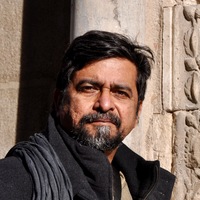 |
| Prof. Ashwani Vasishth |
By Karyssa F. Cendana
For the community experiential assignment, I attended Professor Ashwani Vasishth’s discussion on “Effective Climate Communication” at Ramapo College’s online conference on the Youth Climate Movement. I chose to attend this session because I found it interesting that there was an entire discussion dedicated to how to talk to people about climate change. For the most part, I had always been under the impression that to convince people to take the issue of climate change seriously, we need to ensure that they truly understand the severity of the crisis. The method by which people choose to do so may vary, but overall, I thought that discussing the tragedy and chaos that climate change brought about was the most effective way to command the attention of skeptics.
Ashwani’s approach surprised me. Though I have never had the pleasure of being taught by him in class, I had heard him speak numerous times prior to this event. I had wrongfully assumed that he had little tolerance for skeptics and favored focusing on the real destruction that climate change can cause when addressing the public.
Instead, his philosophy on climate education was a lot less harsh than I had expected it to be. First, he emphasized the importance of clearing any misconceptions about climate change or its related terms. For example, he differentiated between “regular” and “rampant” carbon dioxide in order to combat the argument that carbon dioxide is natural, therefore it isn’t a climate issue. He said that while it is true that carbon dioxide naturally occurs in the atmosphere, it typically does so in a particular “balance” with a number of other elements/substances. Anthropogenic or “rampant” carbon dioxide overthrows this balance, leading to a plethora of issues (including global warming). By defining terms and educating someone who isn’t familiar with climate science before bombarding them with “negatives,” one can help to better transition someone’s thought process on climate change.
Another important point that Ashwani made was the dismantling and reconstruction of the “greenhouse metaphor” when discussing the greenhouse effect. He claims that this terminology can sometimes be confusing for people who aren’t familiar with climate science, and that it could be more widely understood as a “heat-trapping blanket” which reflects heat back to earth. My understanding of this claim is that the word “greenhouse” has a positive connotation, which may downplay the severity of global warming or even cause some people to consider the argument that global warming is good for the environment.
Finally, Ashwani discussed the importance of working to change the way people view their relationship with the environment. When making this point, he used the ocean as a great example. “We think of the ocean as a resource,” he said. “so we treat it as such.” This idea can be applied to the many different ecosystems that are present on earth, and this mindset is part of what makes humans so detrimental to the environment. As opposed to seeing the environment as something we should be in harmony and balance with, humans view the environment as a resource--a tool. When we think of something existing for the sole purpose of being there for us to use, we lack feeling any sort of connection or sympathy for harming it in any way. It is because many people lack this connection that they often don’t feel guilty for not living sustainably. In some cases, this can even lead to people thinking they aren’t doing anything wrong in the first place.
My biggest takeaway from this discussion is that the fight against climate change is not a battle between believers and non-believers. I chose to be an environmental science student because I wanted to make a difference and “be on the right side of history,” but the more I learn, the more I realize that I chose this path for the wrong reason. Moving forward, I now understand that the battle against climate change isn’t about winning an argument and proving people wrong for the greater good. Instead, it’s about working to bring people together so that we can acknowledge the relationship we must maintain between ourselves and the earth.
Subscribe to:
Posts (Atom)